home icon
search icon
menu icon

Law Studies

Undergraduate Program (S-1)
Star Achievement Icon KPI 3 Award - Lecturers Engaging in Off-Campus Activities Universitas Sumatera Utara Star Achievement Icon KPI 4 Award - Practitioner Teaching on Campus Universitas Sumatera Utara Star Achievement Icon KPI 5 - Lecturers' work is used by the community or gets international recognition Universitas Sumatera Utara Star Achievement Icon KPI 6 Award - Study Programme Collaborates with World Class Partners Universitas Sumatera Utara

Law, as a study of the set of rules made and applied by social or government institutions to regulate societal behavior and realize justice, is an essential foundation for forming a civilized social order. Since its establishment in 1954, the Undergraduate Program in Law Studies of Universitas Sumatera Utara (USU) has proven its success in producing qualified legal experts, such as lawyers, prosecutors, notaries, and legal diplomats, who participate in various parts of Indonesia. The contribution of law students cannot be ignored either. They have become the pillar in making the USU Faculty of Law (FH) one of the leading law faculties in Indonesia by 2022, based on data from THE AUR. The program focuses on teaching various branches of law, such as civil law, criminal law, constitutional law, and other fields.

icon
Year Established 1954
icon
Professor 15
icon
Scientific Article xxx
icon
Students 2.613
icon
Staff 86
icon
Alumni 13.662
icon
Citation xxx
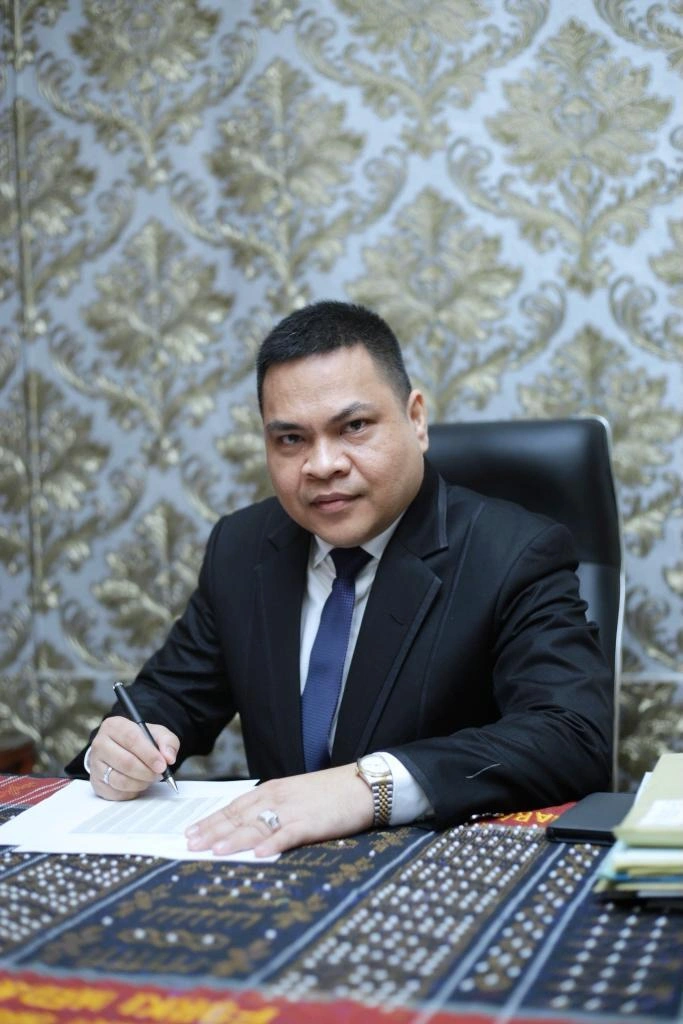
Dr. Yefrizawati SH., M.Hum

With great pleasure, I am pleased to welcome you to the Undergraduate Program in Law StudiesFaculty of Law, Universitas Sumatera Utara.

Assalamu’alaikum warahmatullahi wabarakatuh.

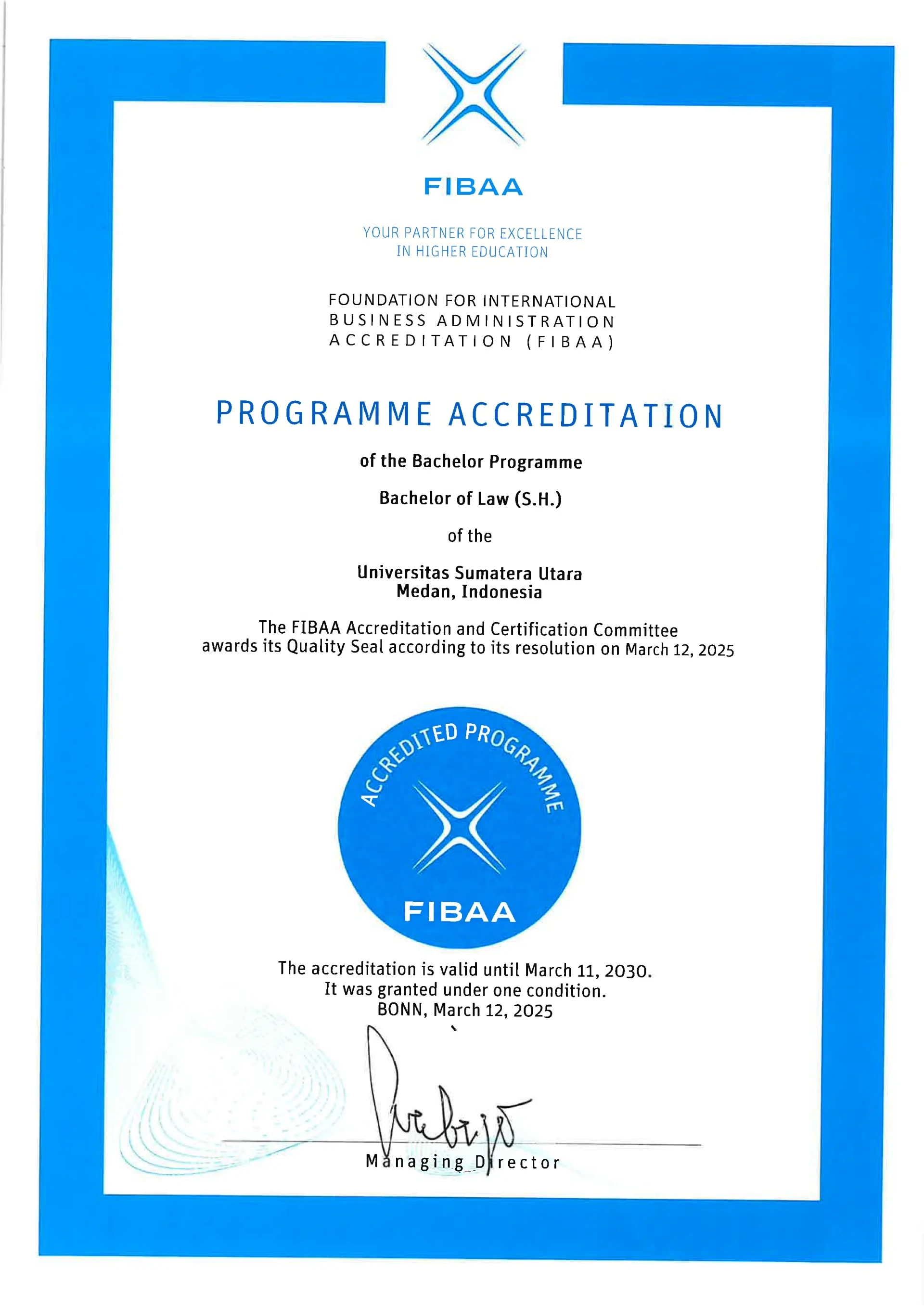
Welcome to the website of the Undergraduate Program in Law Studies. This site contains information about academic activities within the Undergraduate Program in Law Studies. Currently, the program has earned an “Excellent” accreditation and is preparing for international accreditation. Join the Undergraduate Program in Law Studies for a better legal education.

Dr. Yefrizawati SH., M.Hum
Head of Undergraduate Program In Law Studies
Undergraduate Program In Law Studies Accredited - Undergraduate Program In Law Studies Accredited Excellent No. 6183/SK/BAN-PT/Ak.Ppj/S/X/2024
Lab Fasilkom-TI

Curriculum Undergraduate Program in Law Studies

You will learn things such as:

  • Corporate Crime
  • Corruption Crime
  • Bankruptcy
  • Money Laundering Crime
  • Child Protection
Curriculum
ornament

Graduate Profile

The following is a list of graduate profiles found in Undergraduate Program in Law Studies

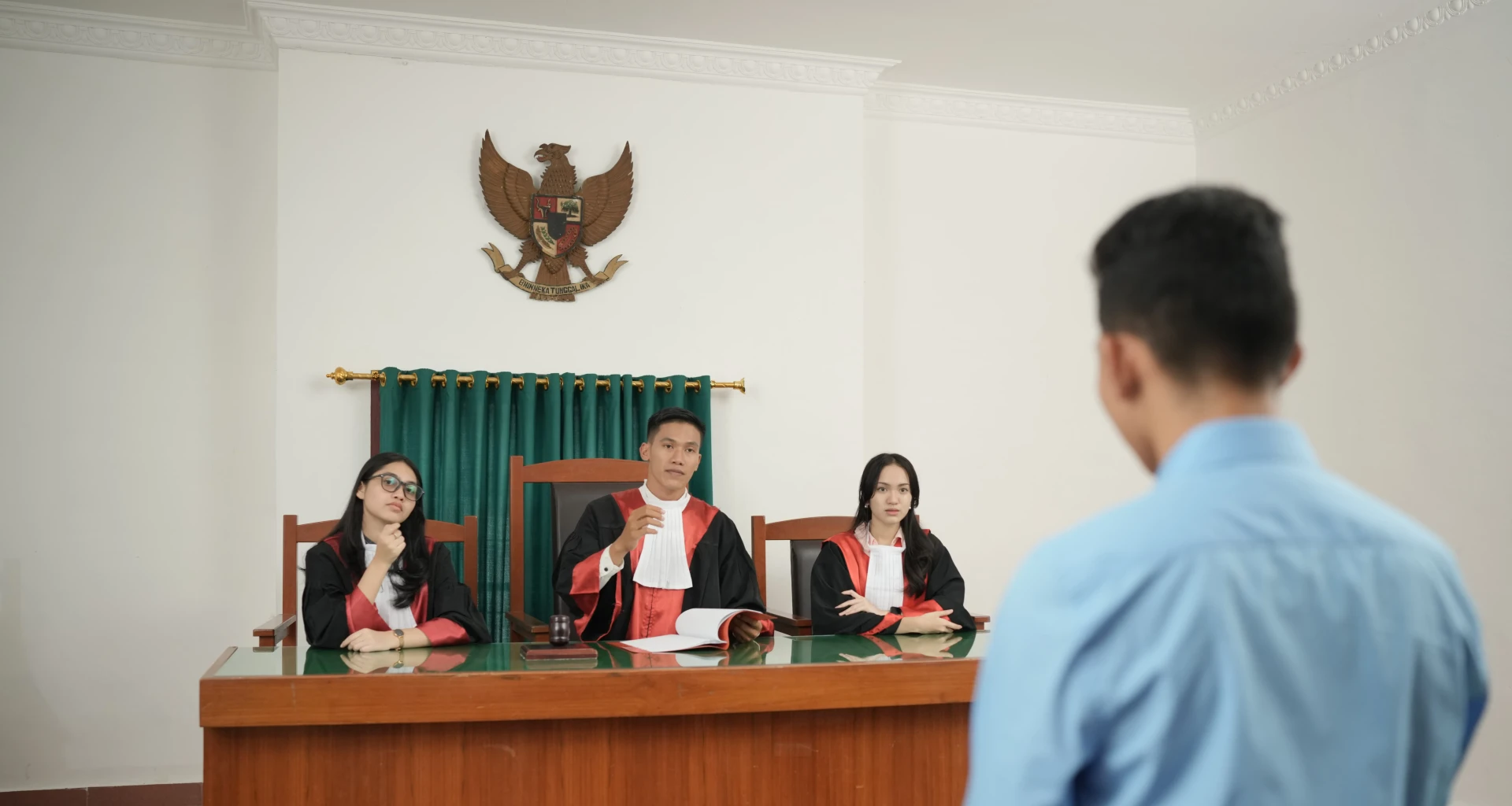
The role of legal staff involves a wide range of tasks, from providing legal advice and drafting legal documents to handling disputes and litigation.

Within a private law firm, Legal Staff may participate in legal investigations, draft legal opinions, and provide legal advice to clients. They may be involved in various areas of law, such as corporate law, property law, tax law, or employment law. Expertise in legal research, case analysis, and a deep understanding of the law are essential for daily tasks.

In the corporate sector, Legal Staff ensure that the company's policies and actions comply with applicable regulations. They may be involved in drafting contracts, designing internal policies, and providing legal advice related to business operations. In addition, legal staff can also play an essential role in risk management, helping companies identify potential legal issues and develop strategies to overcome legal challenges.

HRD Staff's primary role involves designing employee development programs to improve the team's skills, knowledge, and competencies. With a legal background, HRD Staff deeply understand labor regulations, company policies, and human resource-related laws. They can help ensure that the company's policies and practices comply with applicable labor regulations, as well as provide guidance to employees and management regarding legal aspects within the scope of human resources.


In addition, HRD Staff are also involved in putting together training programs that cover technical skills development, leadership, and career development. Their understanding of employment law ensures that the programs comply with regulations and company policies while supporting employee growth and development. HRD staff can work closely with management to identify training needs, design appropriate programs, and evaluate their impact on employee productivity and retention.

The duties of Ministry Staff cover a wide range of areas, from legal research and analysis to policy drafting, to coordinating the implementation of government programs. With a legal background, they bring a deep understanding of the regulations and laws that form the legal foundation for government policies and programs. Ministry staff may also prepare legal documents, draft laws, and provide legal advice to ministry officials.


Their legal expertise is particularly needed in policy development to ensure compliance with applicable regulations and laws. In this regard, Ministry Staff may collaborate with various stakeholders, including legislative bodies, civil society, and the private sector, to ensure the policies designed achieve government objectives while complying with legal principles.


Ministry Staff may also be involved in development planning and budgeting processes, working to craft sustainable economic and fiscal policies. They can assist in designing business regulations, investment policies, and other policy instruments that support economic growth and national development.

As educators, lecturers have a role in conveying knowledge, guiding students, and shaping critical thinking in a legal context. Lecturers of the Bachelor of Laws Department are involved in various activities, ranging from giving lectures and compiling curricula to conducting research and scientific publications.


In giving lectures, Lecturers not only convey information about legal theory but also play a role in developing students' analytical, problem-solving, and legal reasoning skills. They can be involved in teaching various courses, ranging from civil, criminal, and administrative to international law, providing students with a comprehensive understanding of multiple aspects of law.


In addition to teaching, Lecturers also contribute to structuring and developing curricula relevant to legal developments and the needs of society. They can be involved in adapting learning materials to the latest legal trends, ensuring that students get an education that matches the demands of the professional world. An in-depth understanding of changes in legal practice and dynamic legal developments becomes essential in establishing a relevant curriculum.

As a court administrator, the court clerk is responsible for compiling and maintaining court records, including copies of judgments, trial documents, and other forms. Organizational skills and thoroughness are essential in this role, given the importance of accurate documentation in court. Court clerks are also involved in facilitating trials, managing court schedules, and communicating with the various parties involved, including lawyers, prosecutors, and disputing parties.


In addition, court clerks have an essential role in supporting judges. They help prepare trial materials, detail legal arguments, and ensure all documents required for the trial are ready. Clerks may also provide technical advice to judges about court procedures, civil or criminal procedural law, and other legal issues that may arise in judicial proceedings.


Clerks' career prospects also involve managing the financial and administrative aspects of the court. They may play a role in monitoring court budgets, managing operational costs, and ensuring all administrative processes comply with applicable regulations and policies. Expertise in resource management and an understanding of administrative law are highly sought-after skills in this context.

Legal activists may work in various areas, including civil rights, environmental rights, women's rights, or migrant rights. They are involved in crafting advocacy campaigns, designing strategies to address specific issues, and mobilizing community support. Communication, research, and political strategy skills are vital in fighting for social change through legal channels.


As human rights defenders, legal activists often investigate and document human rights violations. They may work with international agencies, non-profit organizations, or government agencies to speak out for justice and ensure that perpetrators of human rights violations are brought to justice. Legal expertise is an asset in understanding and addressing the complexities of international and national legal frameworks related to human rights.


Legal activists who focus on environmental rights play a role in combating environmental degradation, fighting deforestation, and ensuring the protection of natural resources. They may be involved in advancing environmental policies, prosecuting companies that damage the environment, or advocating for the rights of communities affected by adverse environmental impacts. A legal understanding of environmental regulations, energy law, and licensing is a highly sought-after skill in fighting environmental sustainability.

In criminal law, lawyers are responsible for defending individuals accused of crimes. They play a vital role in the criminal justice system, ensuring that their clients have competent legal representation, understand their rights, and receive fair treatment in court. Criminal lawyers may also be involved in plea bargaining, investigations, and sentence suspension efforts.


In the civil law sector, lawyers work in various legal contexts involving disputes between individuals, companies, or government agencies. They may handle civil suits, property rights, contracts, or business disputes. The ability to conduct legal research, draft arguments, and negotiate are critical skills in ensuring clients' interests are protected and a fair settlement is reached.


In corporate law, lawyers act as legal advisors to companies and business entities. They may be involved in contractual agreements, labor law, tax law, and compliance with corporate regulations. Corporate lawyers can also provide strategic legal advice to help companies avoid legal conflicts and ensure compliance with government regulations.

In criminal law, prosecutors play a law enforcement role. They work closely with investigators to gather evidence, examine witnesses, and formulate criminal cases. Criminal prosecutors play a central role in court hearings, presenting cases, and pursuing justice before a jury or judge. They can prosecute cases ranging from petty crimes to serious crimes, including murder, theft, or narcotics.


Civil prosecutors, on the other hand, are involved in handling legal disputes between private parties or business institutions. They may lead judicial proceedings to settle civil suits, involve themselves in negotiations to reach amicable settlements, or provide legal advice to government agencies or private clients. The ability to analyze facts, formulate legal arguments, and communicate clearly are critical skills in this role.


In administrative law, prosecutors are essential in ensuring that government decisions comply with law and policy. They may be involved in drafting legal opinions, providing legal advice to government entities, or handling administrative disputes. Administrative prosecutors may also become government advocates in court hearings to defend government decisions or policies.

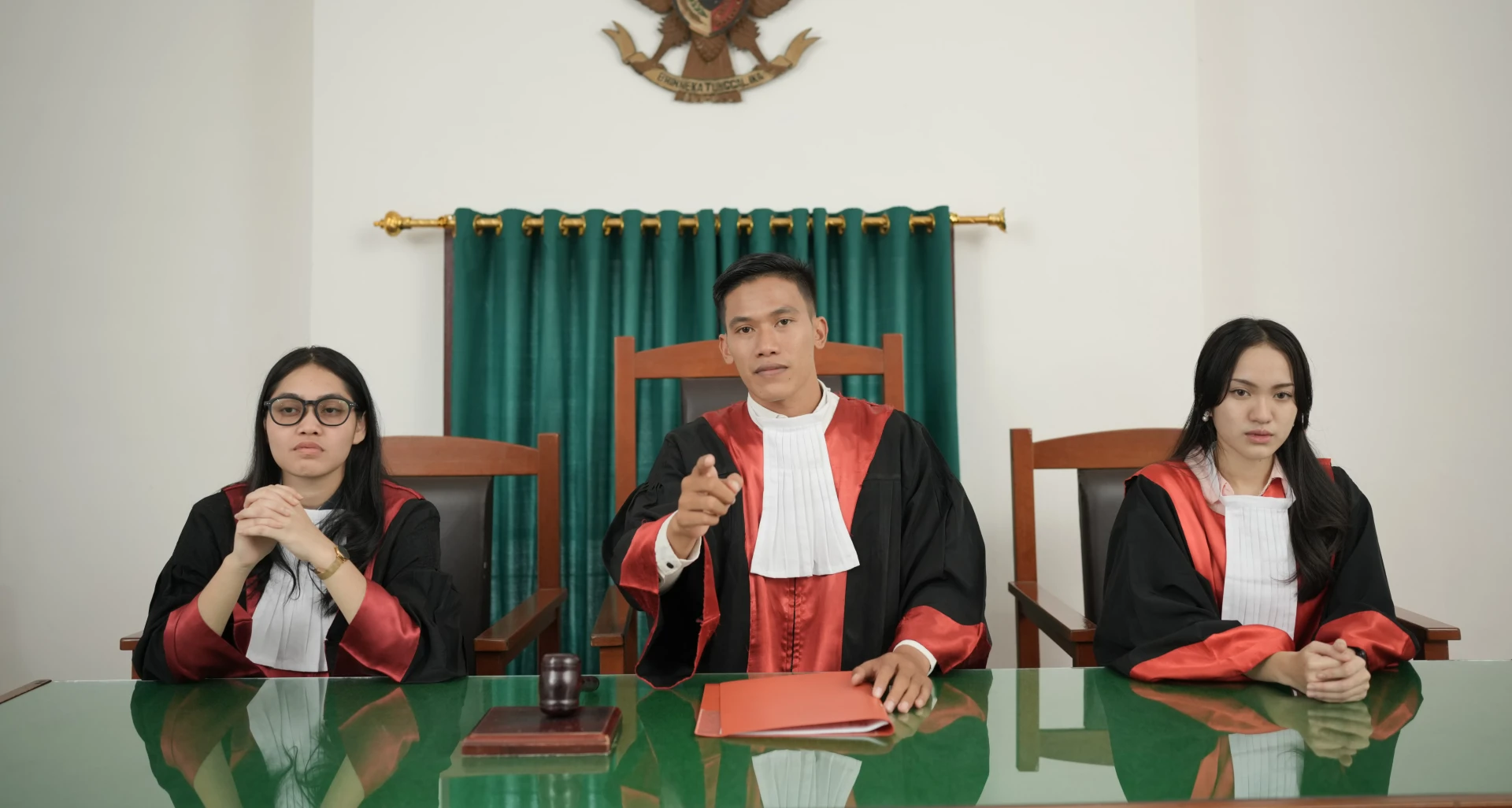
Judges can work at different levels of courts, including high courts, superior courts, district courts, or supreme courts, with some judges even serving at the constitutional level.


In the courtroom, judges are responsible for listening to arguments from both sides, evaluating evidence, and making a fair decision based on the law. They are crucial in understanding complex cases, interpreting statutes, and providing legal direction to juries. Judges' decisions influence the rule of the law, create precedents, and reflect careful interpretation of the law.


Judges may also be involved in mediation and negotiation processes to facilitate amicable settlements between disputing parties before a formal trial. An in-depth understanding of the law and legal policy assists judges in assessing the validity of settlement agreements and assessing whether the settlement complies with the principles of justice and applicable law.

The role of a legal consultant involves providing legal advice to clients, evaluating legal risks, and ensuring that a company's actions or policies comply with applicable laws.


In private law firms, legal consultants may work in various areas of law, such as civil law, criminal law, business law, or environmental law. They may be involved in drafting contracts, providing legal opinions, or leading litigation teams to represent their clients in court. Expertise in various aspects of the law makes legal consultants an invaluable source of knowledge for their clients.


Legal consultants may also work within the company as part of the in-house legal team. In this role, they work closely with various company departments to ensure their policies and actions align with applicable regulations and laws. They may provide legal advice on business contracts, litigation, intellectual property, or general legal compliance.

Diplomats may work in embassies, consulates, or permanent missions in international organizations such as the UN, WTO, or the European Union.


A diplomat's role includes many diverse tasks, ranging from peace and trade negotiations to addressing human rights and environmental issues. They act as a communication bridge between their government and the government of the country they are forwarding to, facilitating interstate dialog and promoting mutual understanding. Diplomats also play an essential role in crafting foreign policy, advising government officials on diplomatic strategy, and analyzing the impact of foreign policy on national interests.


In a legal context, diplomats also negotiate international agreements, assisting in drafting treaty texts and ensuring that legal provisions are met. Expertise in international law becomes invaluable in this role, especially in dealing with border disputes, citizen protection, or international trade negotiations.

Notaries have a role in providing notarial services that include the creation of deeds, contracts, and other legal documents that require official legalization. They can work in notary offices and law firms or establish their own notarial practice.


As authorized legal representatives, notaries are responsible for ensuring that the legal documents they issue are valid and binding. They draft agreements such as sale and purchase deeds, lease agreements, or wills. A notary's ability to understand legal regulations, identify risks, and tailor legal documents to the client's needs are critical skills in carrying out this task.


In addition, notaries also play a role in authenticating signatures, authorizing documents, and providing legal certification on various transactions. They play an essential role in protecting the interests of the parties involved in an agreement and ensuring compliance with applicable laws. The existence of a notary provides a guarantee of legal validity and security in various business and civil transactions.

Contact Us

Undergraduate Program in Law Studies Universitas Sumatera Utara
Faculty of Law

Universitas Sumatera Utara

ornament

Alumni Testimonials

-

Assalamu'alaikum wr. wb.
As an alumnus who entered the faculty in 1992, it was the beginning and turning point for me to pursue my aspirations for a successful career in the future. Honestly, law was not my primary choice in my aspirations until it eventually became a challenge and reality I had to pursue.
The most memorable experience for me was during the first semester when I was studying State Science and Introduction to Law courses. These courses were quite challenging to understand due to their broad scope, which posed a challenge for us in Group/Class C to grasp them. When the end-of-semester examination results were released, it turned out that only around 8 (eight) people, including myself, passed the course out of dozens in our group/class. I felt great satisfaction upon learning about the results of the end-of-semester examinations, which boosted my confidence to delve deeper into my studies at the Universitas Sumatera Utara Faculty of Law. Despite facing challenging economic conditions, I was immensely grateful for the PPA Scholarship provided by the faculty, as it greatly supported me. This further solidified my determination to continue acquiring knowledge, which serves as the cornerstone of my career path in the field of law enforcement as a lawyer (advocate). From the various processes I have undergone since 1996, after graduating from university to date, my goal of establishing a Law Firm named Hasrul Benny Harahap & Rekan located at Jl. Sei Galang No.5, Medan Baru District, Medan City, has been realized.
I realized that whatever achievements I have obtained up to this point are inseparable from the significant role of the beloved campus. I hope that the entire academic community of the faculty and the university are blessed with good health to continue being the embryo for the future of our nation, especially in the field of law. Amen.

Hasrul Benny Harahap, S.H., M.Hum.

Hasrul Benny Harahap, S.H., M.Hum.

1992 - Director of Hasrul Benny Harahap & Partners Law Firm (Chair of the USU Faculty of Law Alumni Association)

-

Assalamu’alaikum warahmatullahi wabarakatuh.
I am Rosihan Juhriah Rangkuti, S.H., M.H., an alumna of the USU Faculty of Law, Batch of 1988.
When I first passed the UMPTN, I felt very proud to be given the opportunity to study at this proud campus of North Sumatra. Especially since I came from a village far from the provincial capital and came from a simple family. Of course, the pride multiplied.
During the early years of my studies, the credit (SKS) system was just implemented, so it was still a transitional period, and not all lecturers fully accepted lower-year students taking higher-semester courses.
Following the lectures at the USU Faculty of Law during the old days posed many challenges. It was very difficult to graduate. There were some courses where only 6 or 8 students passed in one class. Some had to repeat the following year. Alhamdulillah, I was among those who managed to graduate smoothly and received the Supersemar Scholarship at that time.
Studying in groups became our mainstay in mastering the subjects, and we also participated in study sessions organized by senior students in the campus mosque. It was very helpful for us.
After entering the world of work, I realized that the rigorous graduation standards during my college years have provided me with a foundation in legal knowledge that is highly beneficial today. As a result, I have been able to keep up with the current developments in the field of law through various educational and training programs organized by the institution where I work as a judge within the Supreme Court of the Republic of Indonesia.
Currently, I am serving as the Chief Judge of Lubuk Pakam District Court, Class IA. Throughout my career, I have experienced 11 (eleven) transfers and promotions in various regions across Indonesia to serve the islands and nation as a judge.
Happy working.
Wassalamu’alaikum warahmatullahi wabarakatuh.

Rosihan Juhriah Rangkuti, S.H., M.H.

Rosihan Juhriah Rangkuti, S.H., M.H.

1988 - Head of Lubuk Pakam District Court Class IA

-

Assalamu’alaikum wr. wb.
I obtained many benefits during my studies and learning at the USU Faculty of Law. I am deeply impressed by how the lecturers treat their students, creating a warm relationship between students and lecturers as well as among the students themselves. The USU Faculty of Law has been a place where I could develop myself, both in deepening my knowledge of the law and current legal issues, particularly in the field of international law that I specialize in, and also in extracurricular activities such as organizations and event committees. As an alumnus, I take pride in maintaining the bond and camaraderie with the lecturers and fellow alumni. I hope that my friends also experience the same kind of connections. Students should be proud to be part of the USU Faculty of Law, our alma mater, and together, we can contribute to the progress of Indonesia. I would like to express my wishes for the Faculty of Law to continue enhancing its quality, contribution to international and national journals, and having lecturers who serve as role models and positively represent Universitas Sumatera Utara, particularly the Faculty of Law.
That is all from me. I hope that my message is beneficial. Let us continue our efforts to advance our beloved faculty. May we succeed in advancing education in Indonesia.
Wassalamu’alaikum warahmatullahi wabarakatuh.

Ahmad Almaududy Amri, S.H., M.H., M.Si., Ph.D.

Ahmad Almaududy Amri, S.H., M.H., M.Si., Ph.D.

2008 - Diplomat