


.webp)
On Tuesday (August 18, 2026), the Faculty of Law, Universitas Sumatera Utara (FH USU), held an International Guest Lecture entitled “Introduction to Swedish Labor Law: A Global Perspective for Law Students.” The event was conducted in a hybrid format at the International Smart Class 05, FH USU, and streamed online via Microsoft Teams.
The guest lecture featured Judge Pontus Bromander from the Labour Court of Sweden as the speaker, with Dr. Detania Sukarja, S.H., LLM, serving as the moderator. The event was attended by FH USU lecturers and students.
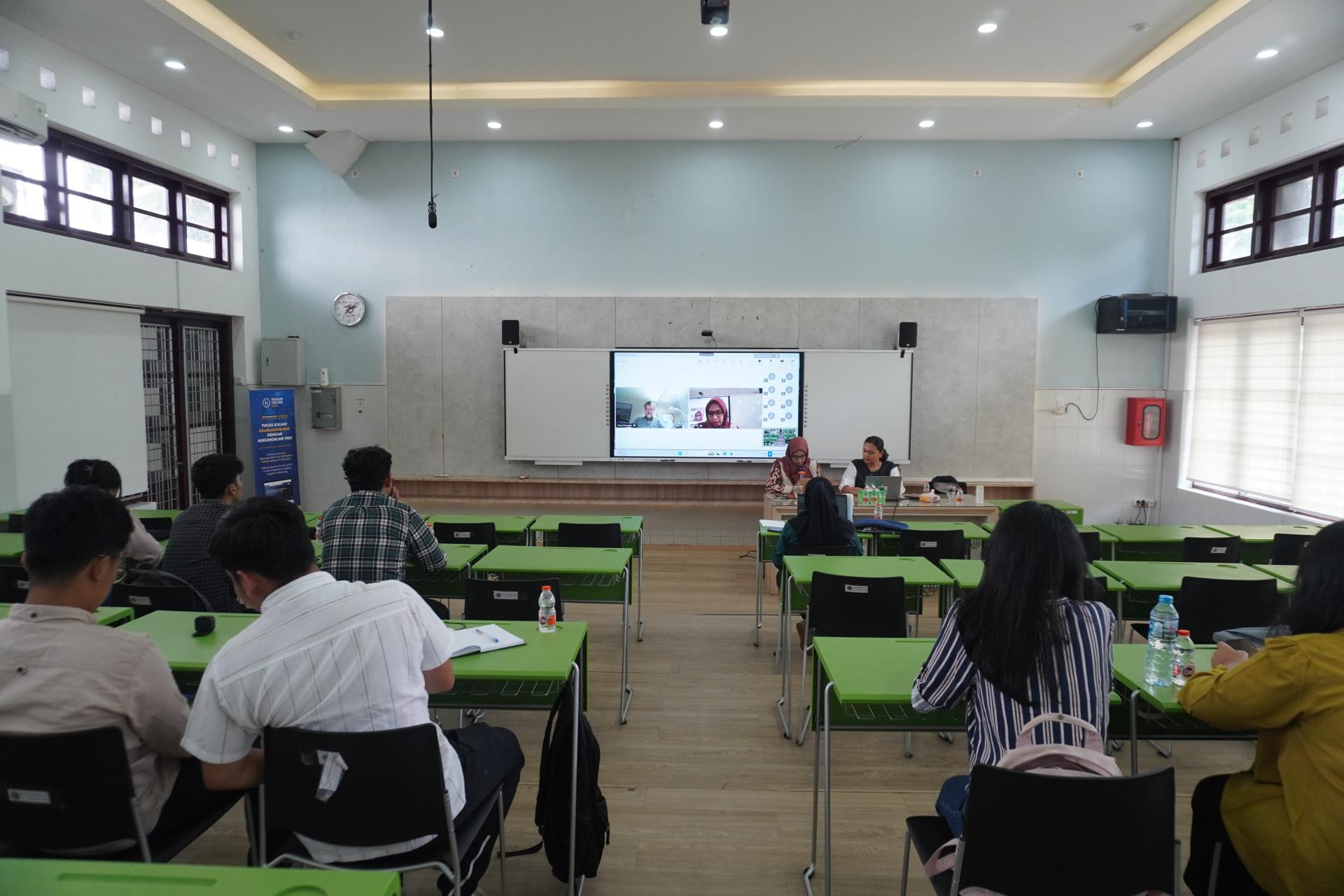
The event was officially opened by the Dean of FH USU, represented by the Head of the Undergraduate Law Study Program at FH USU, Dr. Affila, S.H., M.Hum. In her remarks, Dr. Affila expressed her appreciation to Judge Bromander for accepting FH USU’s invitation and taking the time to share his expertise.
“It is a great honor to welcome an active judge from the Labour Court of Sweden. We are very grateful for this opportunity not only to learn about the Swedish labour law framework but also to understand how labour disputes and issues are understood and resolved in practice,” said Dr. Affila.
In his presentation, Judge Pontus Bromander explained that labour law is a field of law that directly affects people’s lives. It not only regulates employment contracts, wages, and working conditions but also concerns dignity, justice, social protection, and the balance of power in the workplace. At the same time, labour law is expected to respond to changes in the economy, new business models, technological developments, and the transformation of the nature of work itself.
The discussion addressed various countries, including Indonesia, which currently faces similar challenges in determining how the law can protect workers while maintaining productivity and business competitiveness, respond to platform-based work and algorithmic management, protect domestic workers and other vulnerable groups, and balance flexibility, job security, and access to social protection.
In this context, Sweden offers a valuable perspective. Labour relations in Sweden are closely associated with collective bargaining, social dialogue, and the active participation of employers’ organizations and trade unions. The Labour Court of Sweden also plays an important role in interpreting and developing labour law through the resolution of employment disputes.
It was also emphasized that comparative law studies do not mean simply copying another country’s legal system, as each legal system develops within its own social, political, economic, and institutional context. Nevertheless, studying other jurisdictions enables students and academics to examine their own legal system more critically, identify different approaches, question established assumptions, and consider ideas that may be relevant for adaptation in Indonesia.
Dr. Affila expressed her hope that the guest lecture would demonstrate that labour law is not merely a collection of legal provisions, but a living and dynamic field shaped by negotiation, institutions, court decisions, social values, and changes in the world of work.
She also encouraged all participants to make the most of the opportunity. “Please listen actively, take note of the comparative insights presented, and do not hesitate to ask questions during the discussion session,” she concluded.