


.webp)
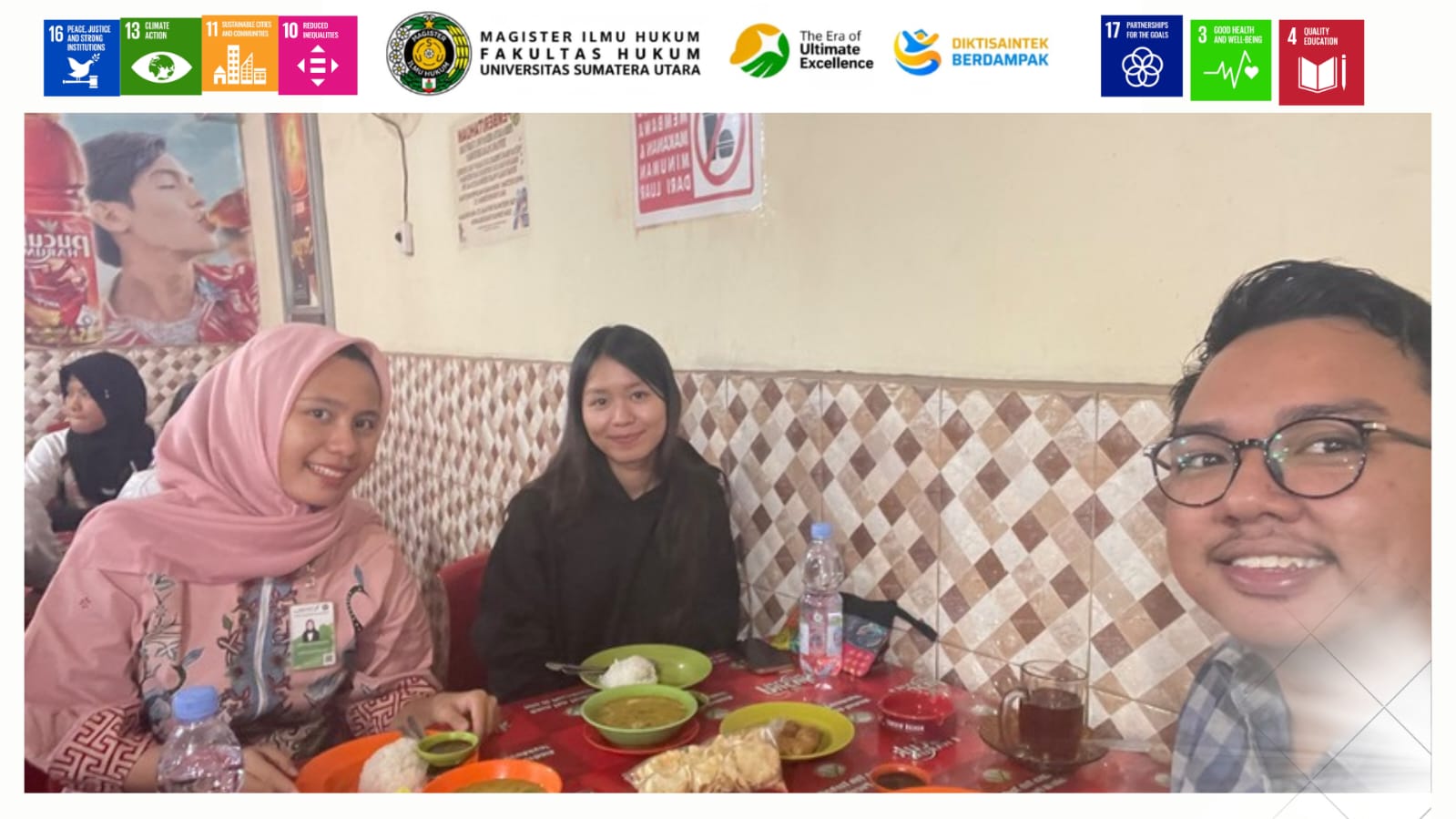
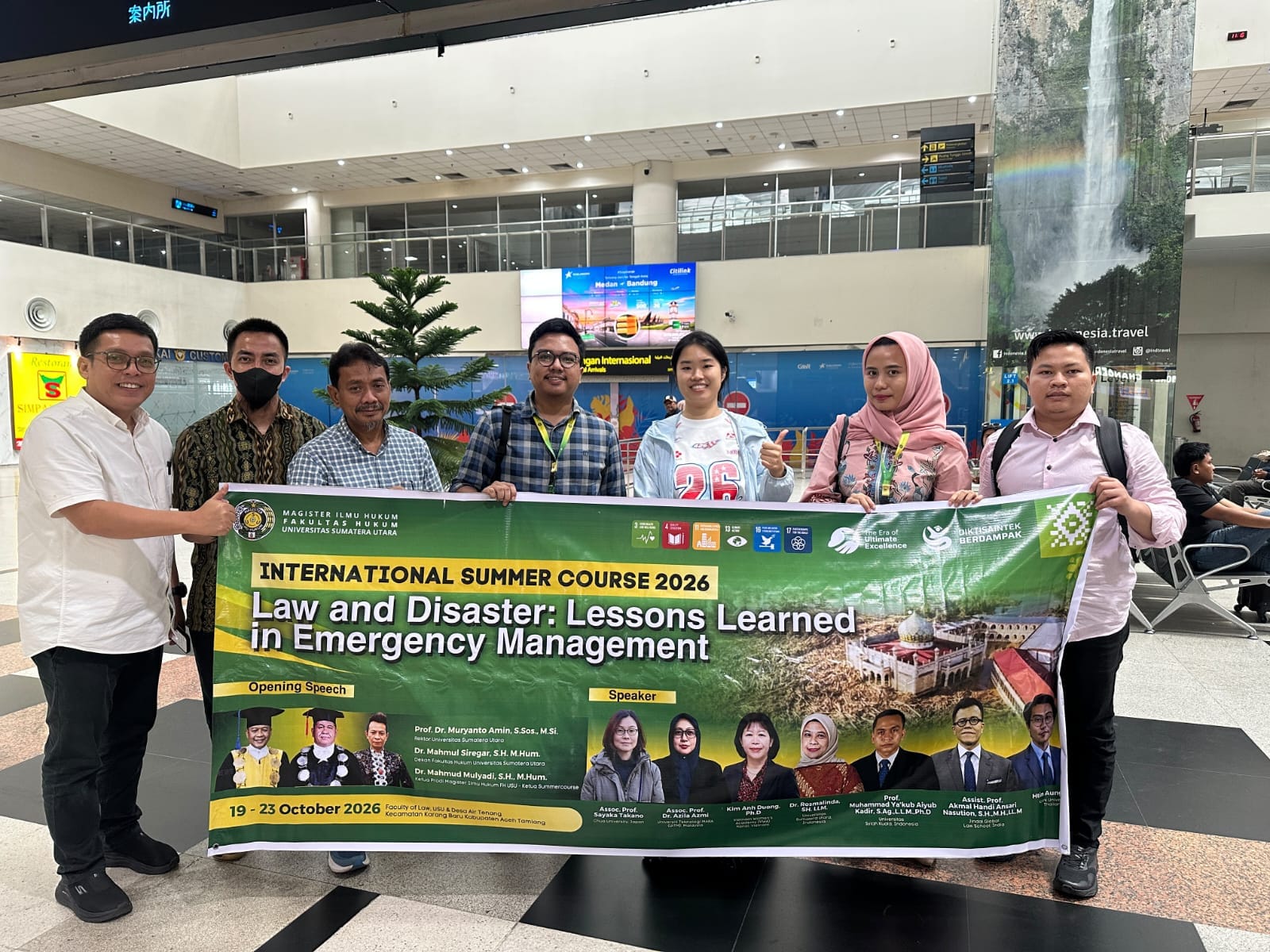
FH USU Public Relations: On Monday (October 19, 2026), the Faculty of Law, Universitas Sumatera Utara (FH USU), welcomed international students arriving for Summer Course 2026. The participants were picked up at Kualanamu International Airport (KNIA) at 06:30 WIB by the Vice Dean III of the Faculty of Law, Dr. Mohammad Ekaputra, S.H., M.Hum., together with Boy Laksamana, S.H., M.Hum.; Dr. Abdul Aziz Alsa, S.H., M.H.; Mohammad Effan Djodie, S.H., M.H.; Nabila Afifah Salwa, S.H., M.H.; and other members of the organizing committee.
The participants picked up included Htet Htet Hlaing from Myanmar, who is currently studying at Universitas Syiah Kuala. The team also welcomed Aftab and Mathan Kumar, both from Pakistan and studying at Universitas Wahid Hasyim, were also picked up, along with Chen Minghui from China, who is currently studying at USM.
The team then welcomed the faculty participant, Asst. Prof. Dr. Afridah Abas, along with other students from the International Islamic University Malaysia (IIUM), namely Wan Madiha Husna binti Wan Omar, Huda Hayati binti Haniff, Muaz Bunyamen Aqil bin Mohamad Rosely, Nur Alya Nabilla binti Noor Iskandar, Raziq Rusyaidi bin Roshidi, and Nur Wardah Nadhirah binti Mohd Badrol.
Several other international students currently studying at Universitas Muhammadiyah Sumatera Utara (UMSU) were also picked up to participate in this year's Summer Course 2026.
The airport pickup marked the start of the series of activities for FH USU Summer Course 2026 activities, which carries the theme “Law and Disaster: Lessons Learned in Emergency Management.” This academic program is designed to broaden participants' understanding of the role of law in disaster management, emergency response, and the protection of affected communities.
As a short-term academic learning program, the Summer Course provides students with opportunities to deepen their knowledge through scientific discussions, cross-country exchanges of perspectives, and contextual learning. Through this approach, participants are expected to understand legal issues not only from a normative perspective but also in relation to social realities and the challenges faced by communities.
The series of activities will take place over the coming days in several locations, including Langsa and the Lake Toba area. These locations provide learning contexts for broadening participants' understanding of regional characteristics, community dynamics, and the importance of governance that responds to risks and development challenges.
Disaster experiences in Aceh and its surrounding areas, particularly the 2004 earthquake and tsunami and the devastating floods that affected several areas of Nanggroe Aceh Darussalam Province in late 2025, including Langsa City, provide important contexts for learning about preparedness, institutional coordination, and the protection of community rights during emergencies. Meanwhile, the Lake Toba area offers perspectives on environmental management, community safety, and the importance of considering risks in regional development while upholding environmental conservation.
Through this theme, participants are expected to understand that disaster management involves more than emergency response. It also encompasses mitigation, preparedness, recovery, and the strengthening of legal systems. Clear legal frameworks, inter-institutional coordination, and the protection of vulnerable groups are essential elements in building an effective and equitable disaster management system.
Supporting the Sustainable Development Goals (SDGs)
The theme of FH USU Summer Course 2026 is related to several Sustainable Development Goals (SDGs) established by the United Nations.
SDG 11: Sustainable Cities and Communities, particularly its targets on reducing the impacts of disasters, is relevant to efforts to build safe and resilient communities. Learning about preparedness and emergency management can strengthen understanding of the importance of risk reduction and community protection.
SDG 13: Climate Action is related to strengthening the capacity to address disaster risks influenced by climate change. Legal and environmental policy perspectives are needed to support adaptation measures and improve community resilience.
SDG 16: Peace, Justice and Strong Institutions is one of the main focuses because disaster management requires legal certainty, effective institutions, accountability, and guarantees for protecting the rights of affected communities.
SDG 17: Partnerships for the Goals is reflected in the exchange of knowledge and experiences across countries. Academic collaboration creates opportunities to develop shared perspectives in addressing disaster-related challenges that require cooperation among various stakeholders.
In addition, SDG 4: Quality Education provides a foundation for developing academic competencies through cross-cultural learning, while SDG 10: Reduced Inequalities is relevant to ensuring that vulnerable groups receive fair protection and access to assistance when disasters occur.
These connections demonstrate the strategic role of legal education in supporting sustainable development, particularly through strengthening legal awareness, developing academic capacity, and deepening understanding of community protection.
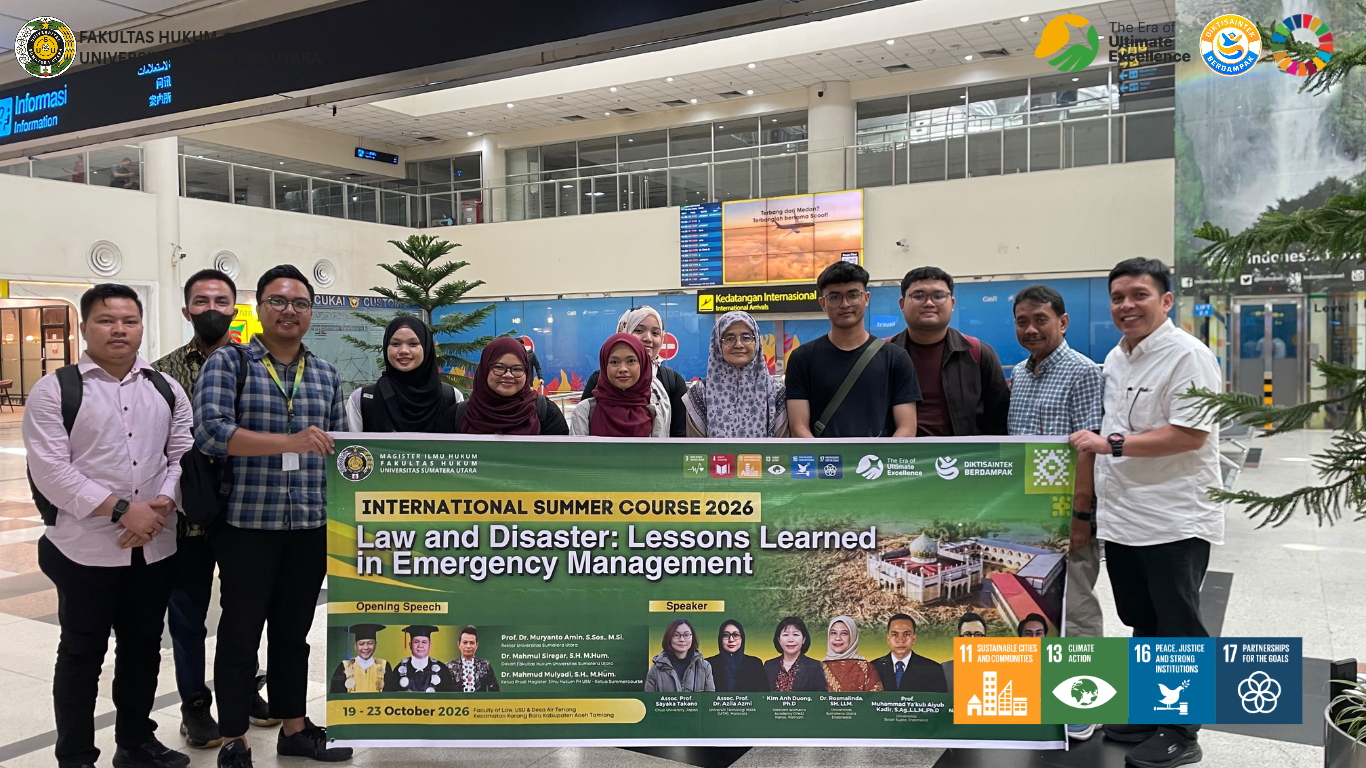
Through Summer Course 2026, the Faculty of Law, Universitas Sumatera Utara, provides a learning environment that connects legal studies with humanitarian and disaster-related issues. The participation of students from different national backgrounds is expected to enrich the exchange of ideas and promote a more comprehensive understanding of emergency management.
The program is expected to serve as a platform for developing legal perspectives oriented toward justice, community resilience, and sustainable development, while strengthening cross-country academic collaboration in addressing disaster management challenges.