


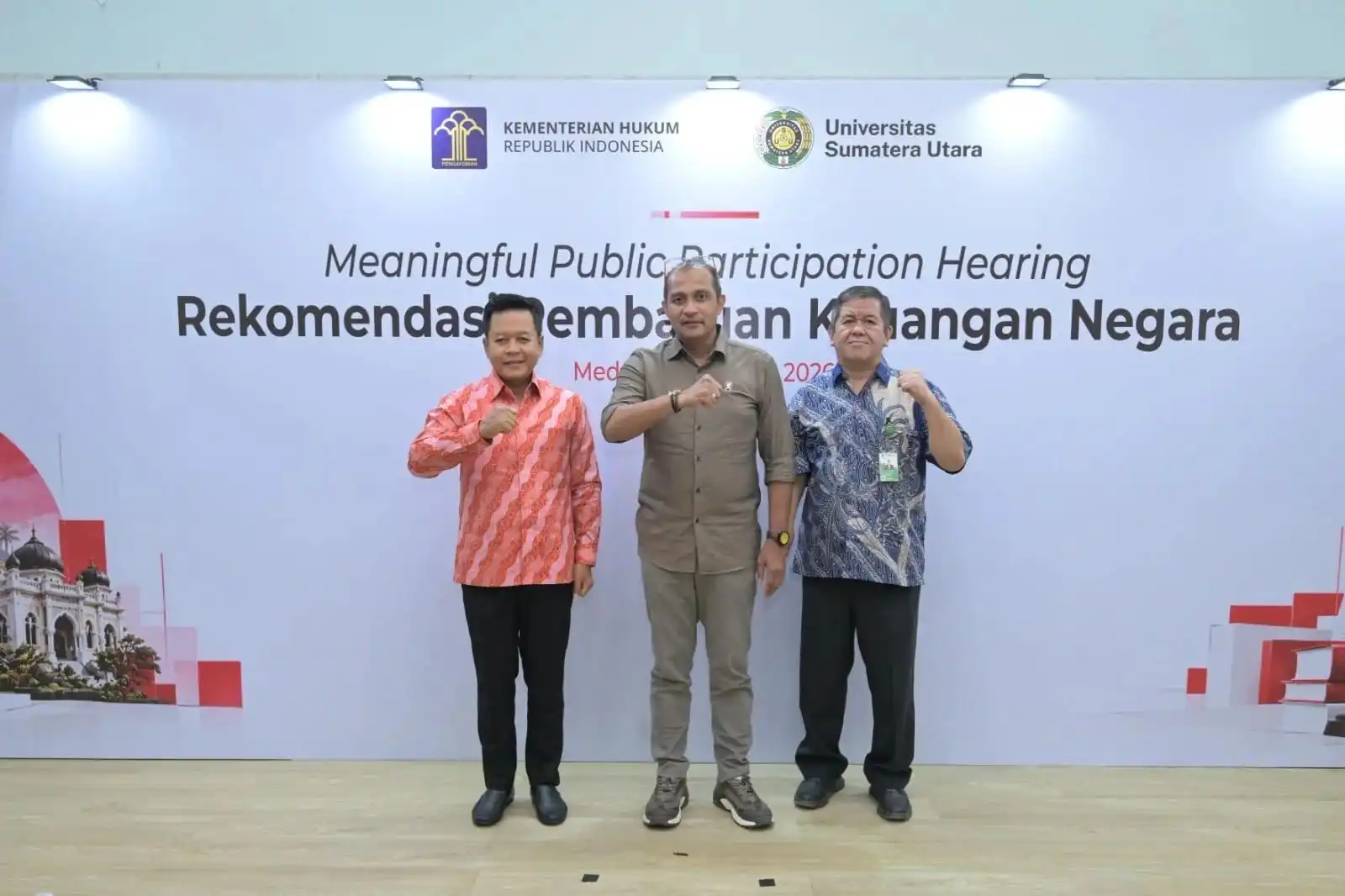
Universitas Sumatera Utara (USU) hosted the Meaningful Public Participation Hearing on the Draft Amendments to the State Finance Law on Thursday, October 22, 2026, at the Faculty of Law, USU. The event provided a platform for academics and government representatives to offer constructive input for improving state financial regulations, focusing on regulatory harmonization and legal certainty in state asset management.
In his opening remarks, the Rector of USU, Prof. Dr. Muryanto Amin, S.Sos., M.Si., expressed his appreciation to the Ministry of Law of the Republic of Indonesia for selecting USU as the host venue for this forum. He expressed hope that the discussions would generate valuable insights to refine state financial regulations, including the management of assets in State Universities as Legal Entities (PTN-BH) to support educational funding needs.
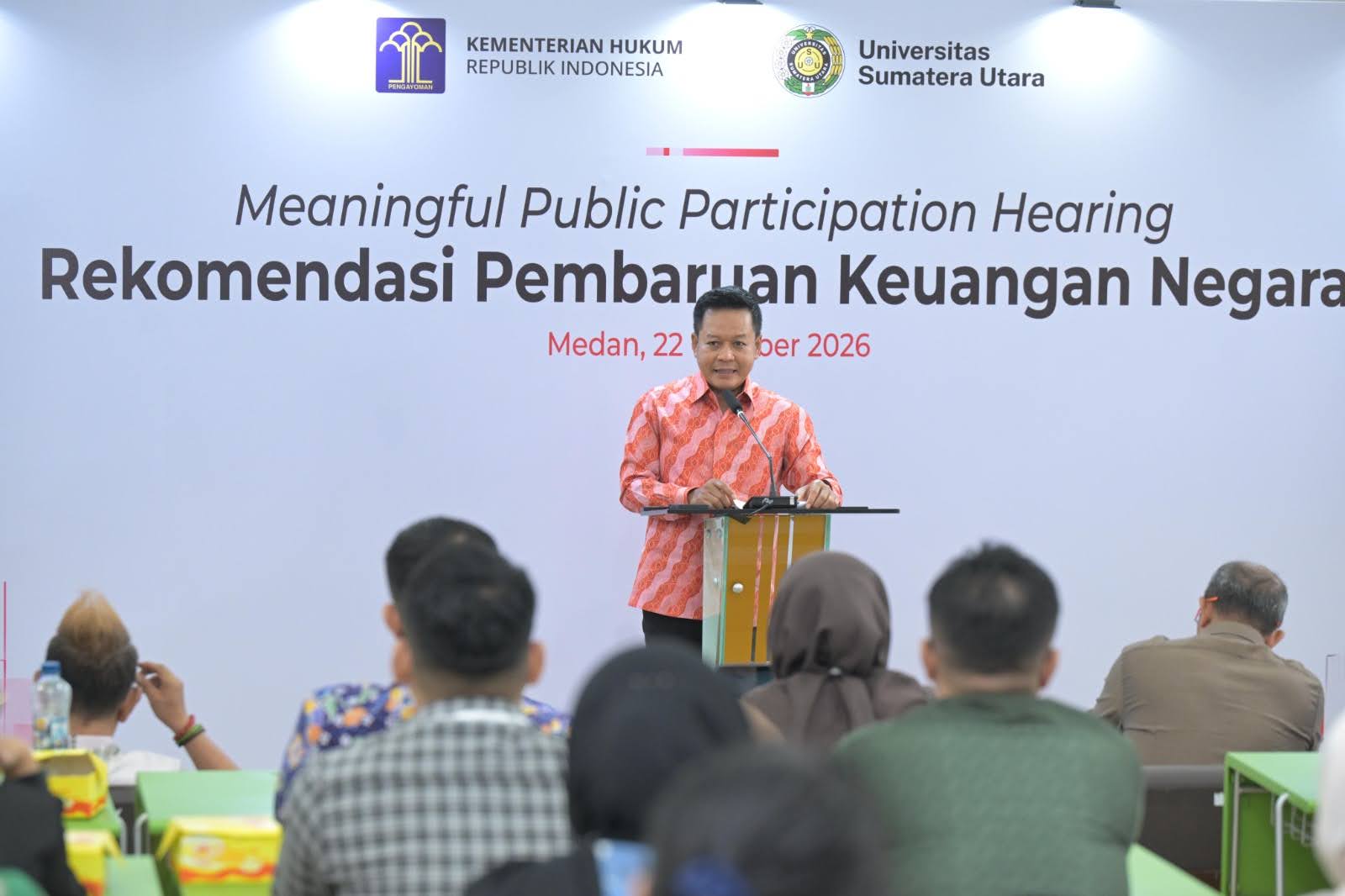
"Hopefully, this event will provide substantial insights for all of us regarding this crucial Bill on state finance," he stated.
Meanwhile, the Dean of the Faculty of Law USU, Dr. Mahmul Siregar, S.H., M.Hum., highlighted existing legal uncertainties resulting from unaligned regulations concerning state finances, particularly within State-Owned Enterprises (SOEs/BUMN). This situation is often viewed as creating hesitation among decision-makers regarding investment and innovation.
"This uncertainty leaves many SOE managers hesitant to make decisions or invest," he noted.
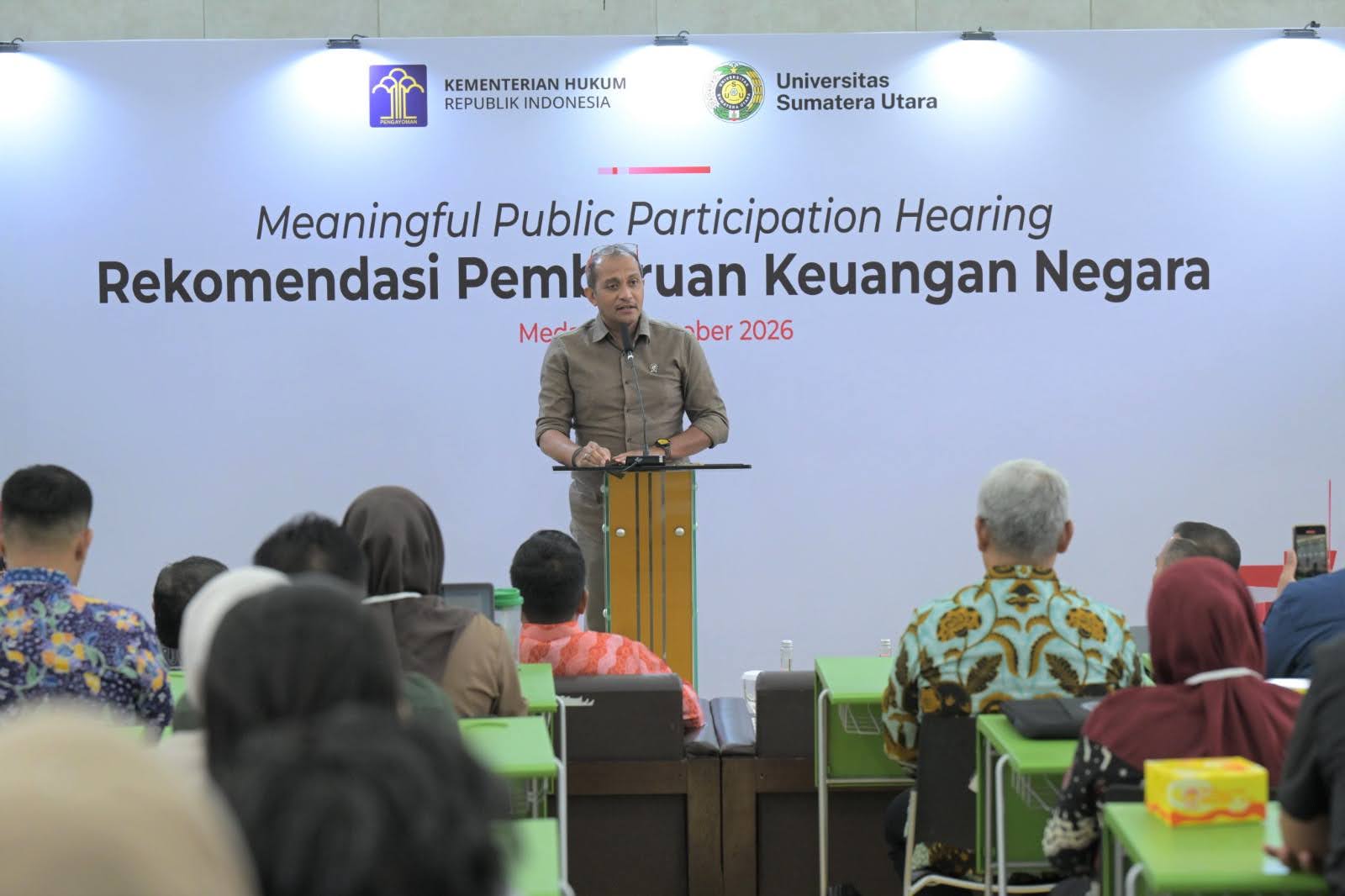
In his keynote speech, the Deputy Minister of Law of the Republic of Indonesia, Prof. Dr. Edward Omar Sharif Hiariej, S.H., M.H., emphasized the urgency of legal harmonization to standardize state asset management practices, especially within SOEs. He explained that regulatory alignment is essential to clarify legal accountability and prevent conflicting interpretations when handling state financial loss issues. "Synchronization and harmonization are vital for us all," he expressed.
Furthermore, he stressed the need for standardized audits when assessing state financial losses to prevent inconsistent outcomes for the same subject matter. According to him, regulatory alignment is necessary to establish clear legal boundaries in applying anti-corruption provisions.
"What must not occur is law enforcement agencies conducting calculations of state financial losses without a uniform standard," he emphasized.
Dr. Mahmul Siregar, S.H., M.Hum., explained that this forum represents the initial phase of a comprehensive process to refine state financial governance. Engaging universities enables academics to contribute research findings and technical expertise toward public policy formulation.
"Our contribution as a state university, particularly the Faculty of Law, is to provide analytical insights using the expertise of our lecturers and academic staff to contribute to policy drafting," he explained.
He added that the Faculty of Law USU will follow up on the forum's outcomes through lecturer research development and formal academic submissions to the government. Continuous collaboration with the Ministry of Law is expected to facilitate deeper scholarly reviews of state financial governance.
"We certainly hope to collaborate further with the Ministry of Law to continue developing analytical frameworks on this matter," he added.
Through this Meaningful Public Participation Hearing, USU aims to strengthen academic contributions to public policy development while promoting state financial regulatory reforms that deliver legal certainty and foster responsible state financial governance.