


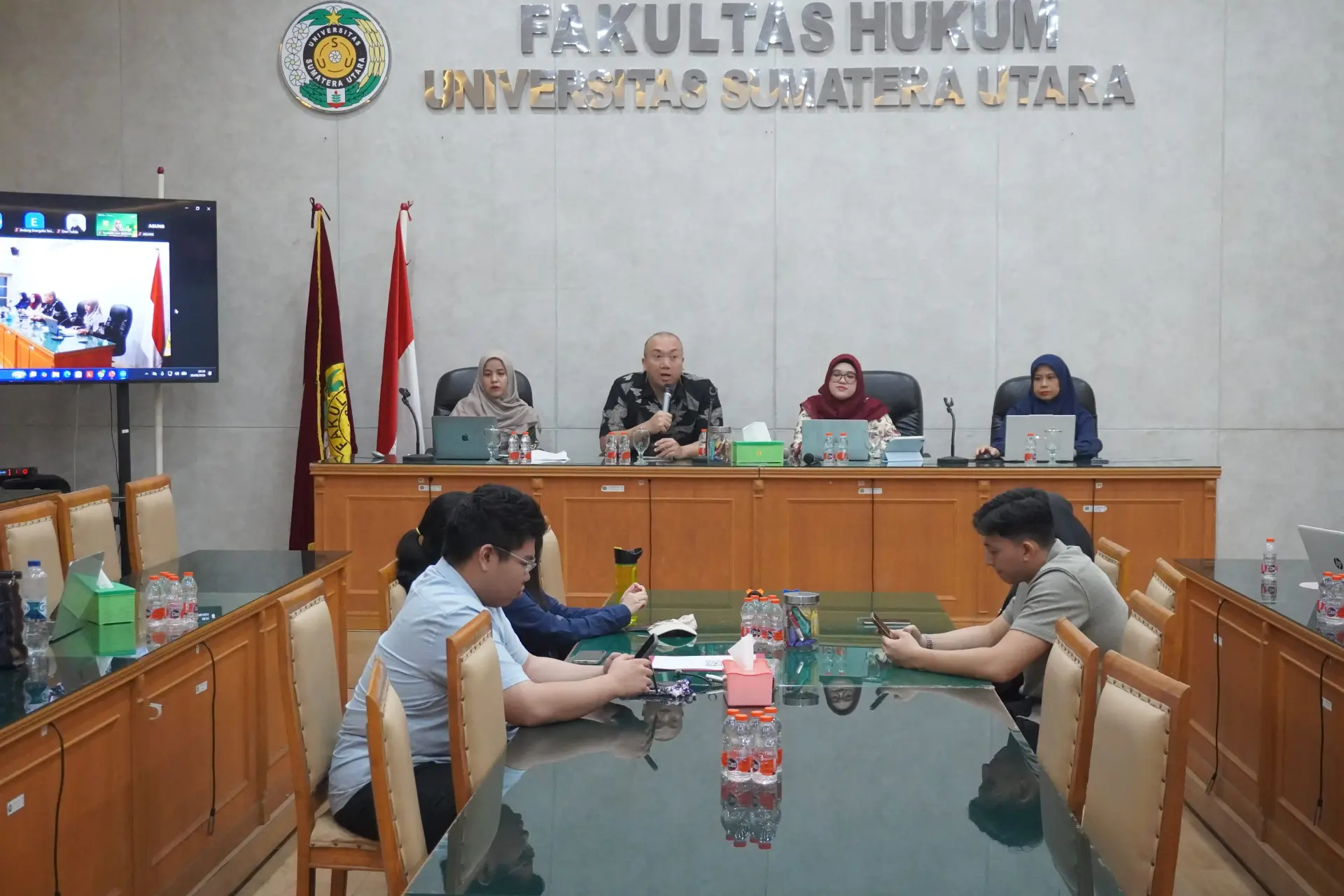
The Faculty of Law, Universitas Sumatera Utara (FH USU), organized a Scientific Publication Writing Clinic for students of the Undergraduate Program in Law, Master's Program in Law Studies, and Master's Program in Notarial Law. The activity was held on Wednesday, September 30, 2026.
The clinic aimed to improve students' ability to transform legal research findings into scientific articles suitable for publication in accredited national journals and reputable international journals.
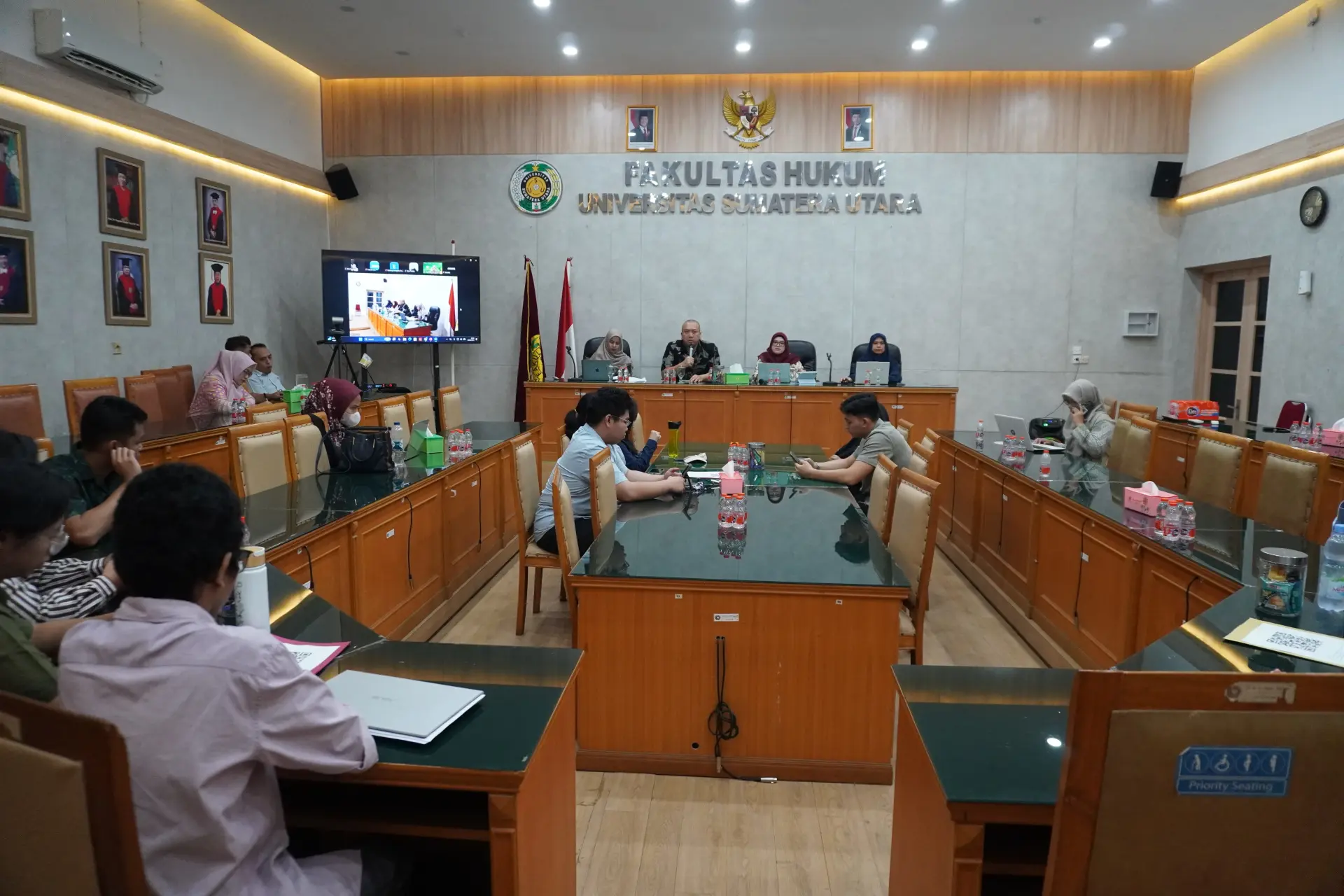
The activity was moderated by Devi Yulida, S.H., M.H., and featured two speakers from FH USU. Dr. Rosmalinda, S.H., LL.M., delivered a presentation entitled "From Legal Research to Reputable Scientific Publication." She explained that the training objectives were tailored to the respective levels and study programs:
- Undergraduate students were trained to define the scope of problems, use relevant legal norms and court decisions, and apply regulations to facts while providing reasons for their conclusions.
- Students of the Master's Program in Law Studies were trained to map previous research, account for their methods and conceptual frameworks, and examine counterarguments.
- Students of the Master's Program in Notarial Law focused on the authority and responsibilities of notaries/Land Deed Officials (PPAT), the validity of deeds or transactions, and the protection of the parties.
She also introduced five manuscript checkpoints: problem focus, research gaps and contributions, methods and legal materials, evidence-based revisions, and journal selection and deadlines. In addition, she reviewed the IMRAD article structure (Introduction, Method, Results and Discussion, Conclusion), journal classifications (SINTA 1–4, Scopus, and Web of Science), publication ethics, the use of citation applications such as Mendeley and Zotero, and manuscript similarity checking using Turnitin.
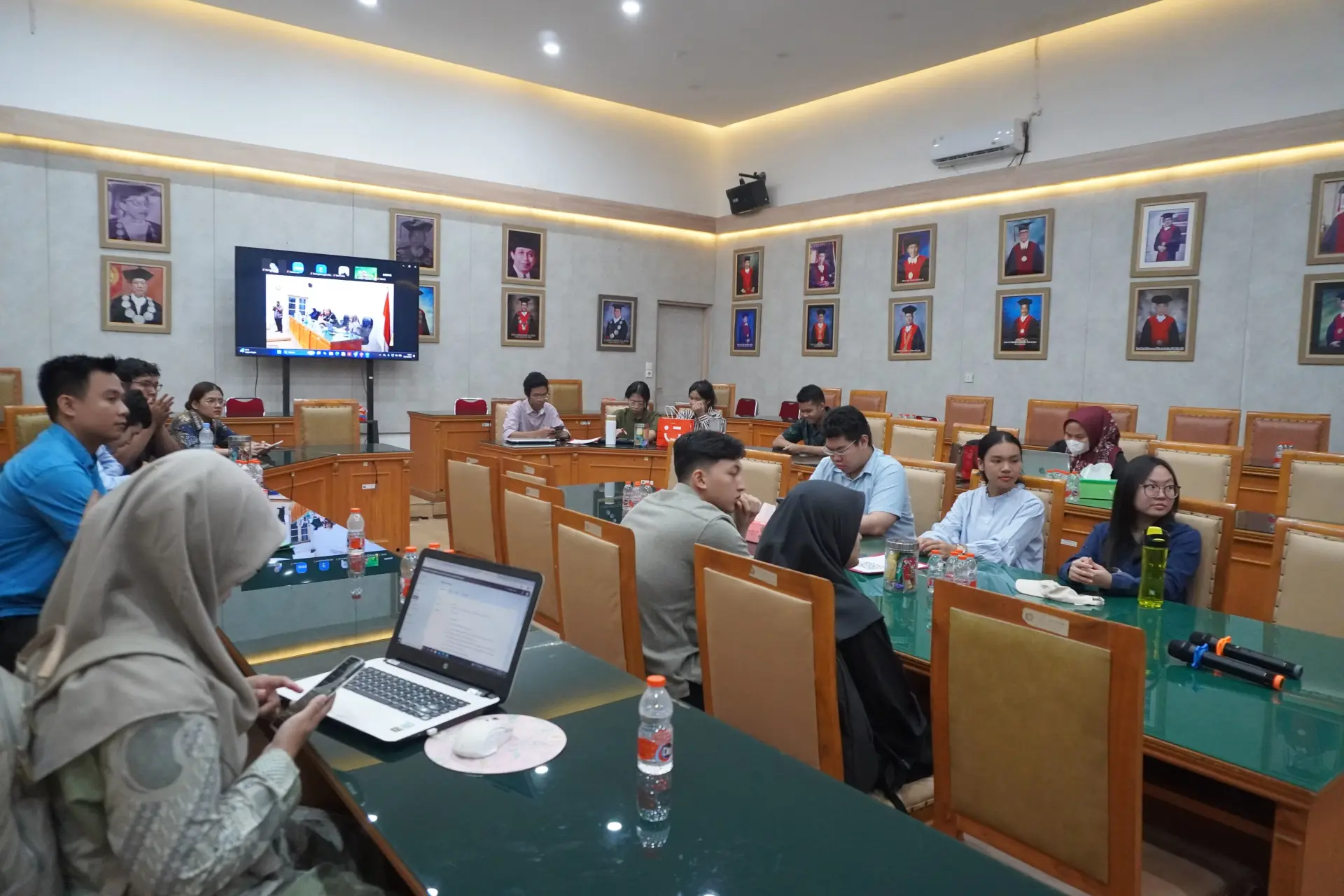
The second speaker, Dr. Syarifah Lisa Andriati, S.H., M.Hum., delivered a presentation entitled "Strategies for Publishing in Scopus Journals." She explained the importance of Scopus for the global visibility of research, citation opportunities, international academic networks, and strengthening academic records. Participants were also introduced to journal search platforms such as SINTA, Scimago, DOAJ, and Elsevier Journal Finder. In her presentation, Dr. Syarifah Lisa emphasized that a good topic should be important, novel, feasible, and publishable. Participants were also invited to formulate research questions, research gaps, and novelty based on the FINER (Feasible, Interesting, Novel, Ethical, Relevant) criteria, as well as to develop titles that are accurate, specific, and easy to find (searchable).
Through this clinic, FH USU hopes that more students will have the confidence and ability to publish their scientific works, thereby strengthening the academic culture and reputation of the faculty at the national and international levels.